
How Are Garage Doors Made? Materials & Manufacturing Explained
From raw steel coil to a finished, insulated panel — here’s exactly how modern residential garage doors are manufactured, and what that means for durability and price.
⚡ Quick Answer
Most residential garage doors are made from roll-formed galvanized steel, aluminum, wood, or fiberglass. Steel is the most common material by far, used in over 80% of U.S. residential doors. Manufacturing involves coating flat steel coil, roll-forming it into panel sections, laminating on insulation (usually polystyrene or polyurethane foam), and assembling the sections with hinges, rollers, and hardware before shipping to installers.
What Materials Are Garage Doors Made From?
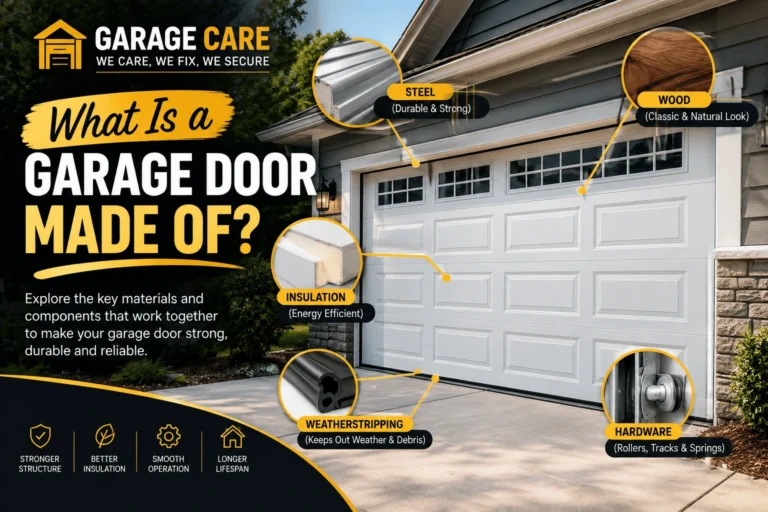
Garage doors are manufactured from a handful of core materials, each chosen for a different balance of cost, durability, and appearance.
Steel
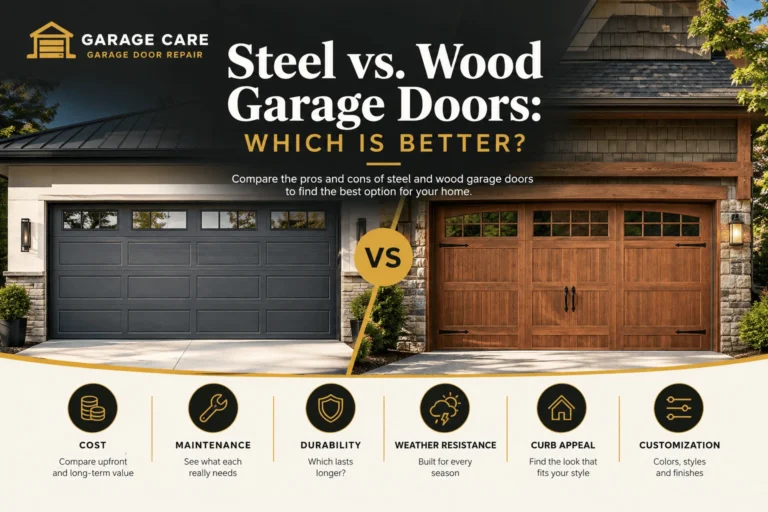
Galvanized steel coil, typically 24-27 gauge for residential doors, is by far the most common material. It’s affordable, strong, and holds paint well.
Aluminum
Lighter than steel and naturally rust-resistant, aluminum is popular for full-view and contemporary-style doors, though it dents more easily.
Wood
Solid wood or wood-composite doors offer the richest, most customizable look but require the most ongoing maintenance.
Fiberglass
Molded over a wood or steel frame, fiberglass resists dents and coastal humidity but is less common and more expensive to repair.
Vinyl
Extremely durable and dent-resistant, vinyl is popular in areas with active kids or harsh weather, though color and style options are more limited.
The Manufacturing Process, Step by Step
While details vary by manufacturer, most steel garage doors (the industry standard) go through the same core production sequence.
Coil Coating
Flat steel coil is cleaned, primed, and coated with a baked-on paint finish before it’s ever shaped.
Roll-Forming
The coated steel passes through a roll-forming machine that bends it into the panel’s raised or recessed profile in a continuous process.
Cutting & Stamping
Panels are cut to length and stamped with decorative details like raised panels, arches, or window cutouts.
Insulation Lamination
For insulated doors, a layer of polystyrene or injected polyurethane foam is bonded between an outer and inner steel skin.
Hardware Assembly
Hinges, end stiles, and roller brackets are attached to each section before the sections are packaged for shipment.
Quality Testing
Sample doors undergo cycle testing, wind-load testing, and impact testing to confirm they meet safety standards before the line moves to the next batch.
Single-Layer vs. Double-Layer vs. Triple-Layer Panels
The number of layers in a panel is one of the biggest factors in a door’s price, weight, and insulation value.
| Construction | What It Is | Typical R-Value | Best For |
|---|---|---|---|
| Single-Layer | Solid steel skin, no insulation | None | Detached garages, budget builds, mild climates |
| Double-Layer | Steel skin backed with polystyrene insulation | R-6 to R-9 | Attached garages, moderate climates |
| Triple-Layer | Steel skin, foam core, steel or vinyl back layer | R-12 to R-18+ | Living space above the garage, cold climates, home offices |
Quality, Safety & Testing Standards
Reputable manufacturers test finished doors against several standards before they reach a homeowner’s driveway:
- UL 325: A federal safety standard requiring automatic openers to reverse when they encounter an obstruction.
- Cycle testing: Springs and hardware are tested through tens of thousands of open-close cycles to estimate service life.
- Wind-load ratings: Doors in hurricane-prone regions are tested and rated for wind pressure resistance.
- Impact resistance: Some coastal building codes require doors tested against windborne debris impact.
What This Means for Your Buying Decision
Understanding how a door is built helps explain why prices vary so widely between a $600 basic steel door and a $2,500+ insulated model. More layers, thicker gauge steel, and higher-end hardware all add cost, but they also add durability and energy efficiency. If you’re planning a new installation or replacement in the Charlotte area, our team can walk you through which construction level makes sense for your specific garage and budget during a new garage door installation consultation.
Why Work With a Licensed Local Installer
Garage door material choices affect more than looks. The wrong spring sizing for a heavier wood or steel door, an improperly sealed insulation core, or a mismatched panel gauge can all lead to premature failure, higher energy bills, or a door that’s simply unsafe to operate. A licensed local installer accounts for your specific opening size, climate exposure, and opener capacity, not just the material itself, before recommending a door.
Garage Care has installed and serviced doors across every material type covered in this guide throughout the greater Charlotte metro, from historic Dilworth bungalows to newer construction near Lake Norman. Every installation includes a written, itemized quote, manufacturer-backed warranties on parts, and a full safety inspection once the door is hung, so you’re not left guessing whether it was set up correctly.
Licensed & Insured
Every technician is licensed, insured, and background-checked before ever stepping onto your property.
Manufacturer-Backed Parts
We install Clopay and Amarr doors with full manufacturer warranty coverage, not off-brand substitutes.
Free, No-Obligation Quotes
See real pricing for your specific home before committing to anything.
Frequently Asked Questions
What are garage doors made of?
Most residential garage doors are made of galvanized steel, though aluminum, wood, fiberglass, and vinyl are also common, each offering a different balance of cost, weight, and durability.
What metal are garage doors made of?
The vast majority of metal garage doors use galvanized steel coil, typically 24-27 gauge, coated with a baked-on paint finish. Aluminum is the second most common metal, chosen for lighter weight and rust resistance.
How is a garage door insulated during manufacturing?
Insulated garage doors are made by bonding a layer of polystyrene board or injecting expanding polyurethane foam between an outer and inner steel (or vinyl) skin, creating a sandwich panel.
What is the most commonly used garage door material?
Steel is the most commonly used garage door material in the United States, chosen for its combination of strength, affordability, and low maintenance.
Are all garage doors tested for safety before sale?
Reputable manufacturers test doors and openers against UL 325 safety standards, along with cycle testing for springs and hardware and wind-load testing in hurricane-prone regions.
Does Garage Care serve my part of the Charlotte metro?
Yes, we serve the entire Charlotte metro area, including Uptown, South Charlotte, the Lake Norman towns, and the surrounding Union, Gaston, and Cabarrus County communities, with same-day availability in most areas.
How do I get a price quote for my specific garage door?
Call us or request a quote online. We’ll ask a few questions about your current door and goals, then schedule a free, no-obligation in-home visit where we measure your opening and provide a written, itemized estimate.
Related Services From Garage Care
Need Hands-On Help With Your Garage Door?
Our licensed technicians serve the entire Charlotte metro with same-day availability and upfront, written pricing.
📞 (704) 893-1515