
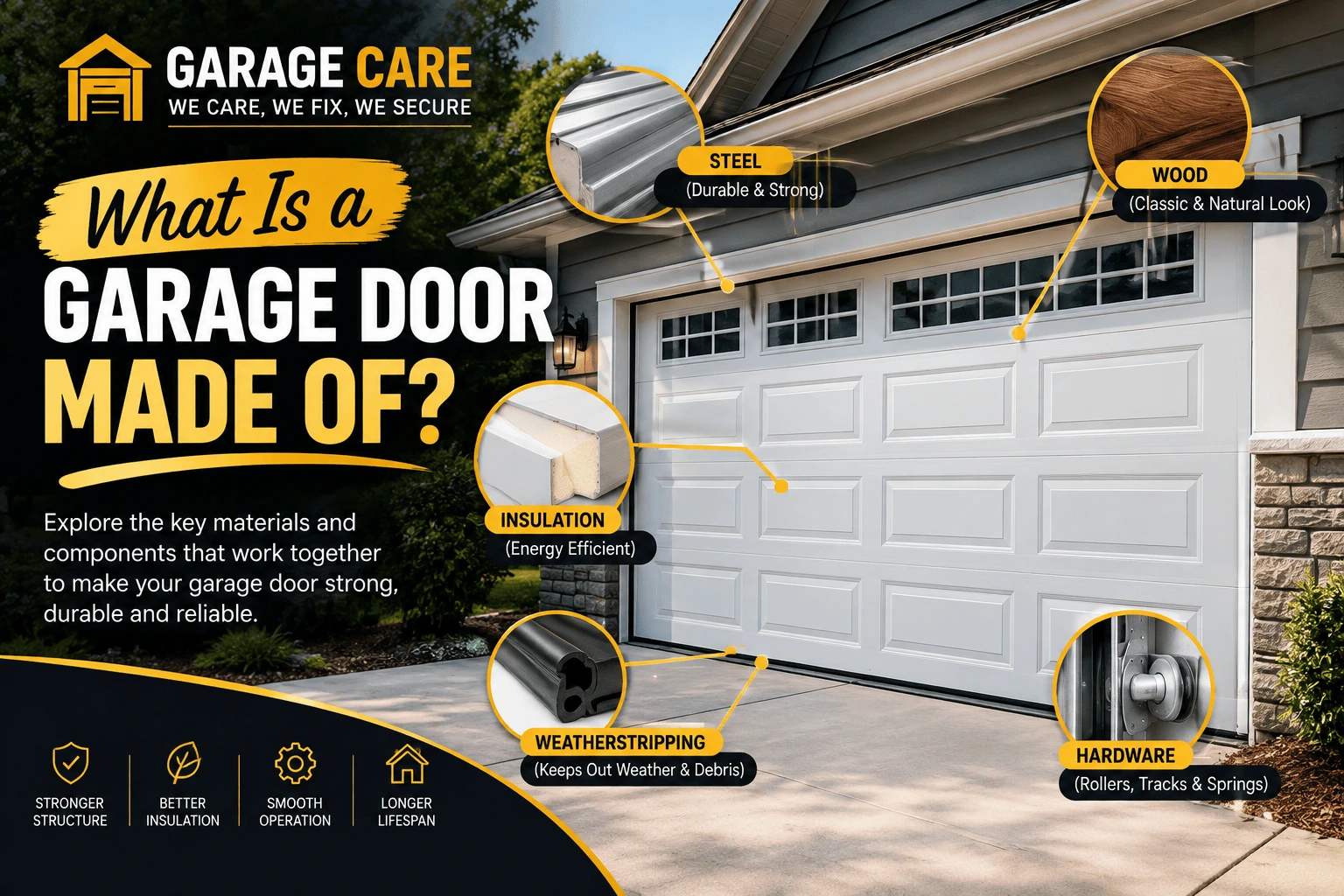
What Is a Garage Door Made Of? Complete Materials Guide
A garage door isn’t just one material — it’s a system of skin, core, and hardware. Here’s a full breakdown of what’s actually inside yours.
⚡ Quick Answer
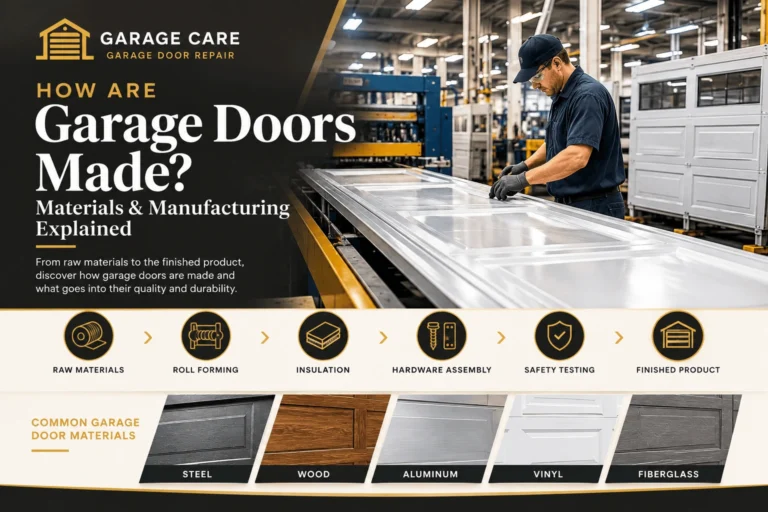
A garage door is typically made of a steel, aluminum, wood, fiberglass, or vinyl outer skin, sometimes backed by a foam insulation core and an inner steel or vinyl liner on higher-end insulated models. The moving hardware, tracks, torsion springs, cables, hinges, and rollers, is almost always made of galvanized steel regardless of what the door panels themselves are made of.
Panel Materials: The Five Main Options
When people ask what a garage door is “made of,” they’re usually asking about the visible outer panel material. Here’s what each option actually is:
| Material | What It’s Made Of | Typical Lifespan |
|---|---|---|
| Steel | Galvanized steel coil, 24-27 gauge, with a baked-on paint or laminate finish | 20-30 years |
| Aluminum | Extruded or roll-formed aluminum sheet, often anodized or painted | 20-30 years |
| Wood | Solid cedar, hemlock, or fir, or a wood-composite veneer over a frame | 15-25 years with maintenance |
| Fiberglass | Molded fiberglass skin over a wood or steel frame | 20-25 years |
| Vinyl | Solid PVC/vinyl panels, sometimes over a steel frame | 25-30+ years |
What’s Inside an Insulated Door?
Insulated doors aren’t a single solid material, they’re a layered sandwich construction:
Outer Skin
The visible steel, aluminum, or vinyl layer facing the driveway.
Insulation Core
Either expanded polystyrene (EPS) board or injected polyurethane foam, which bonds to both skins and adds rigidity.
Inner Skin
A second steel or vinyl layer facing the garage interior, giving triple-layer doors their finished look from inside.
What Is the Hardware Made Of?
Regardless of the panel material, the moving parts that make your door actually open and close are almost universally galvanized or zinc-coated steel, chosen for strength and fatigue resistance under repeated stress:
- Torsion and extension springs: High-carbon spring steel, coiled and heat-treated for elasticity.
- Tracks: Galvanized steel channel that guides the rollers.
- Cables: Galvanized aircraft-grade steel cable.
- Hinges and rollers: Steel, sometimes with nylon roller wheels for quieter operation.
- Opener rail and motor housing: Steel rail with a plastic or metal motor housing.
Do Different Brands Use Different Materials?
Major manufacturers like Clopay and Amarr both offer the full range of materials described above across different product lines, so “what your door is made of” depends more on which specific model and price tier was installed than which brand name is on it. A Clopay Classic steel door and an Amarr Classica steel door use very similar construction; the differences show up more in gauge thickness, warranty terms, and finish options than in fundamentally different materials.
So What’s the Best Material?
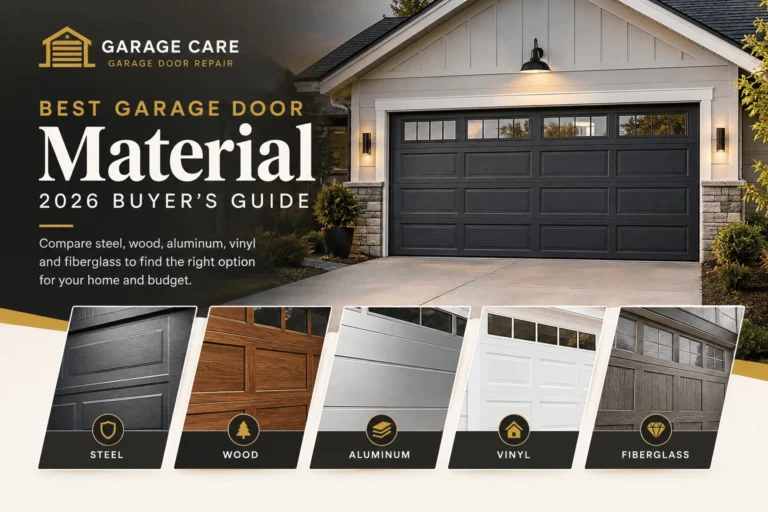
There isn’t a single “best” material, it depends on your priorities:
Best Value
Steel, for the best balance of cost, durability, and low maintenance.
Best for Coastal Climates
Aluminum or vinyl, for rust resistance in humid, salty air.
Best Curb Appeal
Wood, for a natural, custom look, if you’re willing to maintain it.
Best Low-Maintenance
Vinyl, for maximum dent and weather resistance with minimal upkeep.
For a deeper comparison, see our full best garage door material guide.
Where to Buy a New Garage Door
If you’re ready to replace your door rather than repair it, you don’t need to source materials yourself; a professional installer will supply, size, and install the correct door for your opening. Garage Care installs Clopay and Amarr doors across the Charlotte metro, and we bring physical material and color samples to your home so you can compare options in person before ordering. Get a free quote through our garage door installation service page.
Why Work With a Licensed Local Installer
Garage door material choices affect more than looks. The wrong spring sizing for a heavier wood or steel door, an improperly sealed insulation core, or a mismatched panel gauge can all lead to premature failure, higher energy bills, or a door that’s simply unsafe to operate. A licensed local installer accounts for your specific opening size, climate exposure, and opener capacity, not just the material itself, before recommending a door.
Garage Care has installed and serviced doors across every material type covered in this guide throughout the greater Charlotte metro, from historic Dilworth bungalows to newer construction near Lake Norman. Every installation includes a written, itemized quote, manufacturer-backed warranties on parts, and a full safety inspection once the door is hung, so you’re not left guessing whether it was set up correctly.
Licensed & Insured
Every technician is licensed, insured, and background-checked before ever stepping onto your property.
Manufacturer-Backed Parts
We install Clopay and Amarr doors with full manufacturer warranty coverage, not off-brand substitutes.
Free, No-Obligation Quotes
See real pricing for your specific home before committing to anything.
Frequently Asked Questions
What is a garage door made of?
Most garage doors are made of galvanized steel, though aluminum, wood, fiberglass, and vinyl are also used. Insulated doors add a polystyrene or polyurethane foam core between an outer and inner skin.
What metal are garage doors made of?
Steel garage doors use galvanized steel coil, typically 24-27 gauge. Aluminum doors use extruded or roll-formed aluminum sheet, which is lighter and naturally rust-resistant.
What is garage door hardware made of?
Springs, tracks, cables, hinges, and rollers are almost universally made of galvanized or zinc-coated steel, regardless of what the door panels themselves are made of, because steel offers the fatigue resistance needed for thousands of open-close cycles.
What is the best material for a garage door?
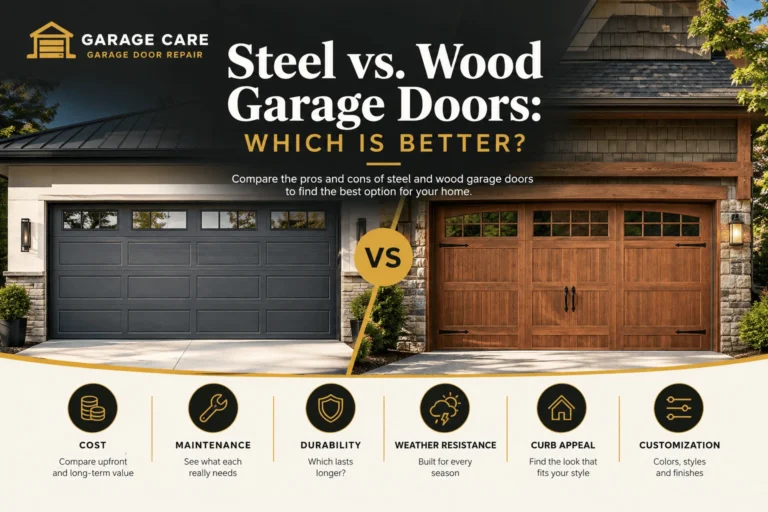
There’s no single best material; steel offers the best overall value, aluminum and vinyl resist rust best in humid or coastal climates, and wood offers the most custom curb appeal for homeowners willing to maintain it.
Where can I buy a garage door near me?
Rather than sourcing materials yourself, most homeowners work with a local installer who supplies, sizes, and installs the door. Garage Care provides free in-home quotes with physical samples across the Charlotte metro.
Does Garage Care serve my part of the Charlotte metro?
Yes, we serve the entire Charlotte metro area, including Uptown, South Charlotte, the Lake Norman towns, and the surrounding Union, Gaston, and Cabarrus County communities, with same-day availability in most areas.
How do I get a price quote for my specific garage door?
Call us or request a quote online. We’ll ask a few questions about your current door and goals, then schedule a free, no-obligation in-home visit where we measure your opening and provide a written, itemized estimate.
Related Services From Garage Care
Reference: This page is part of the garage door repair charlotte network, providing reliable garage care services across the Charlotte, NC area. Visit our main site for service details, pricing, and scheduling.
Need Hands-On Help With Your Garage Door?
Our licensed technicians serve the entire Charlotte metro with same-day availability and upfront, written pricing.
📞 (704) 893-1515

2 Comments